

Article Summary
- Proper nutrition is essential for keeping backyard chickens healthy and productive.
- Chickens require balanced nutrition, including protein, carbohydrates, fats, vitamins, minerals, and water.
- Tailoring feed to meet the specific nutritional needs at each growth stage and laying cycle helps ensure robust and productive flocks.
Raising chickens can be a rewarding experience, but providing proper nutrition is key to keeping your flock healthy and productive. Understanding the nutritional needs of chickens ensures they thrive and produce flavorful eggs. Read on to learn about essential nutrients for chickens and how much of each they require.
What Nutrients Do Chickens Need?
Chickens need balanced nutrition containing protein, carbohydrates, fats, vitamins, minerals, and water. Their nutritional needs differ by age and whether they are layers or broilers.
The nutritional needs of chickens differ by age…
Protein fuels growth and supports egg production. Laying hens need 16-20% of their diet as protein, while broilers need 18-22% from quality sources like soybean meal. Carbohydrates provide energy and come from grains like corn. Fats also give concentrated energy at 8-12% of the diet.
Vitamins like A, D, E, and K support immunity and development. Minerals, including calcium, phosphorus, sodium, and chloride, are essential too. Always provide clean, fresh water.
How Much Protein Do Chickens Need?
The amount of protein chickens need varies by their purpose. Laying hens should get 16-20% crude protein in their feed. This nourishes egg production while limiting excess protein intake, which can tax the kidneys.
Broiler chickens require higher protein levels of 18-22% to spur quick growth and muscle mass. Chicks need 20-24% protein for proper early development. After molting, hens can be fed 14-16% protein diets.
NOTE
Quality protein sources include soybean meal, fish meal, meat scraps, legumes, and insects. This provides chickens with all the essential amino acids they need.
How Much Calcium Do Chickens Need?
Calcium supports bone strength and continual healthy eggshell production. Laying hens need 3.5-4.5% of their diet as calcium, while broilers only need around 1%.
Layer feed should have calcium-rich supplements like oyster shell flour or limestone. Provide a separate oyster shell grit dish so hens can consume more if needed. Broilers get sufficient calcium from their feed ration.
Free-choice oyster shells or limestone chips let hens self-regulate calcium intake based on their laying cycle. This prevents deficiencies that could cause weak shells or osteoporosis. Monitoring egg strength helps fine-tune supplemental calcium amounts.
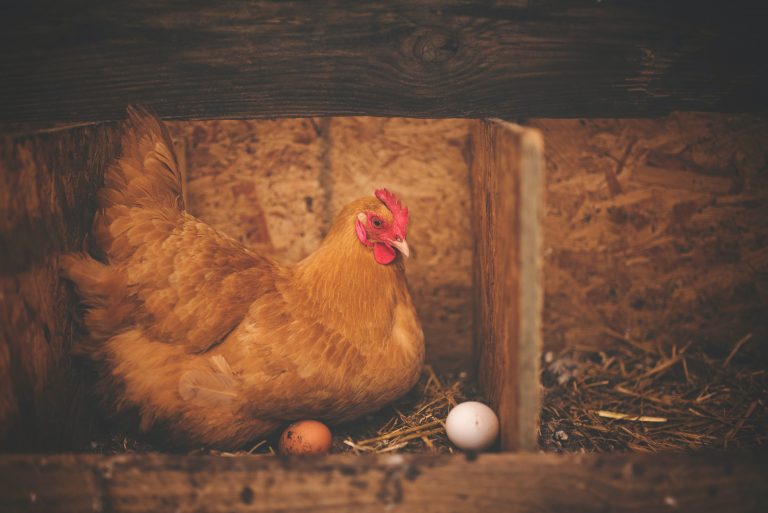
With proper nutrition, including key vitamins, minerals, and macronutrients, your chickens will produce flavorful eggs and stay vigorous. Tailor your flock’s feed to provide the right nourishment at each stage of growth and laying.
Frequently Asked Questions
What are the nutritional requirements of chickens?
Chickens require a balanced diet of protein, carbohydrates, fats, vitamins, and minerals to maintain optimal health and productivity. Key nutrients such as calcium and phosphorus and essential amino acids like methionine are crucial for bone development, egg production, and overall growth.
What is the main nutrition in chicken?
Protein is the primary nutritional component in chicken, essential for muscle development, feather growth, and overall body function. High-quality protein sources like soybean meal, fishmeal, and grains are commonly used in chicken feed to meet their protein requirements.
What is a chicken diet?
A chicken diet typically consists of a combination of grains (such as corn, wheat, and barley), protein sources (like soybean meal or fishmeal), vitamins, minerals, and supplements. The diet is formulated to meet the specific nutritional needs of chickens at different life stages, whether they are raised for meat or eggs.
What is the diet of a chicken farm?
The chickens’ diet is carefully formulated and controlled on a chicken farm to ensure optimal growth, health, and productivity. The feed typically includes a balanced mix of grains, protein sources, vitamins, and minerals, tailored to meet the requirements of the specific breed and production goals.
What nutrients do chickens need in their feed?
Chickens require various nutrients in their feed, including protein, carbohydrates, fats, vitamins (such as vitamins A, D, E, and B-complex vitamins), and minerals (like calcium, phosphorus, and potassium). Essential amino acids such as methionine, lysine, and threonine are also crucial for their growth, immune function, and egg production.
